The Michigan Left: How a Counterintuitive Intersection Design Improves Safety and Traffic Flow
Michigan's signature intersection design eliminates direct left turns, reducing crashes and increasing traffic capacity.
Key Takeaways
- The Michigan Left intersection design eliminates direct left turns, reducing crashes and increasing traffic capacity.
- The design has been proven to reduce crashes by 30-60% and increase intersection capacity by 20-50%.
- Other states, such as North Carolina and Arizona, have adopted similar intersection designs.
- The Michigan Left design is more cost-effective than constructing a conventional interchange.
- The design improves traffic flow by eliminating protected left turns, allowing for simpler traffic light cycles.
What is a Michigan Left?
A Michigan Left is a type of intersection design that eliminates direct left turns at divided highway intersections.
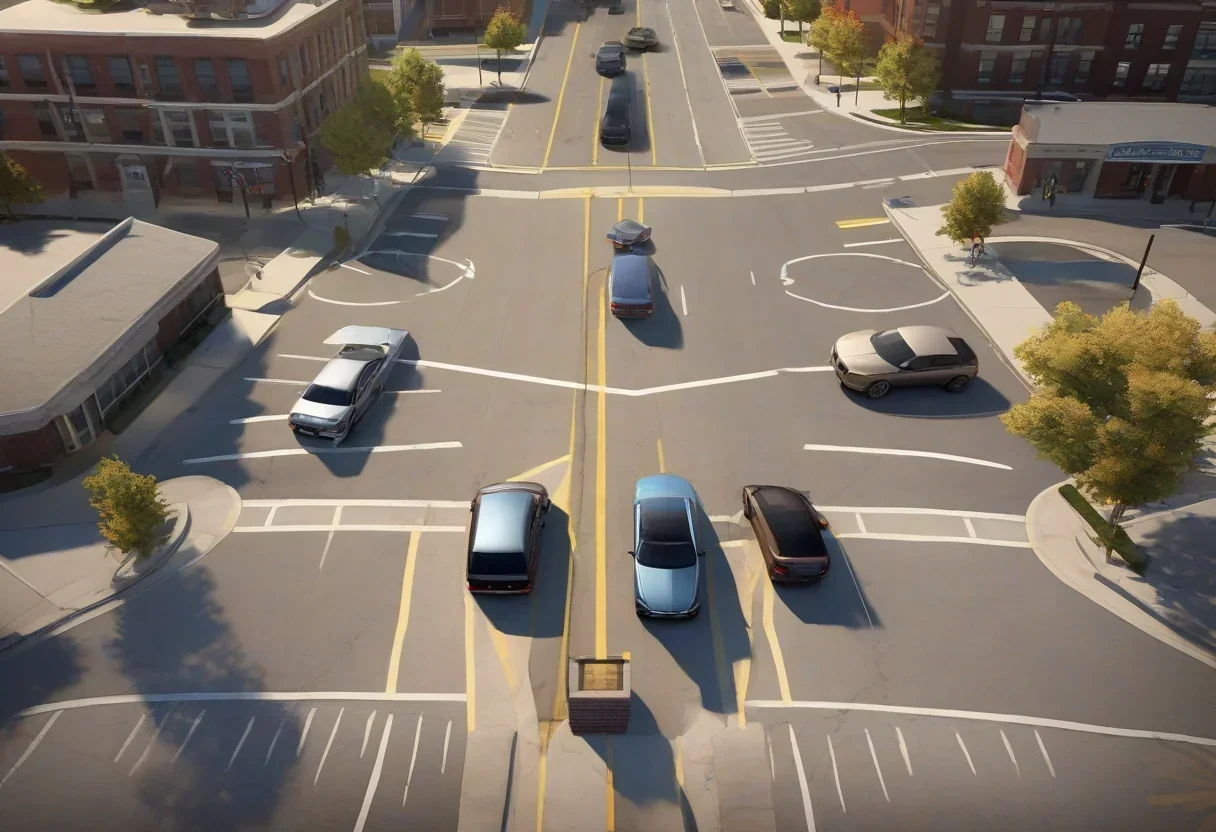
Instead of allowing drivers to turn left across oncoming traffic, the design forces them to continue straight through the intersection, make a U-turn at a dedicated median crossover, and then turn right onto the cross street.
This design may seem counterintuitive, but it has been proven to improve safety and traffic flow.
How Does it Work?
The Michigan Left design works by removing the possibility of direct left turns, which are a common cause of crashes.
By eliminating these turns, the design reduces the risk of head-on collisions and other types of crashes.
The design also improves traffic flow by allowing for simpler traffic light cycles, which can move more vehicles through each green light and reduce congestion.
Why is it Effective?
The Michigan Left design is effective because it assumes human error and takes steps to mitigate it.
By removing the possibility of direct left turns, the design reduces the risk of crashes caused by driver mistakes.
The design also improves traffic flow by allowing for simpler traffic light cycles, which can move more vehicles through each green light and reduce congestion.
History of the Michigan Left
The first modern Michigan Left was developed in 1960 along Telegraph Road (US-24) in Wayne County.
The design was created by engineers Joseph Hobrla and Joseph Marlow, who were dissatisfied with traffic flow at the time.
Today, the state of Michigan has over 425 miles of highway median featuring these specialized crossovers.
Adoption by Other States
The concept of the Michigan Left has quietly spread beyond the state of Michigan.
North Carolina has incorporated similar layouts into its “Superstreet” intersections, while Arizona has adopted comparable designs under the name “Arizona Boulevard.”
The reasoning is simple: the design improves safety and traffic flow while being more cost-effective than constructing a conventional interchange.
Frequently Asked Questions
Q: What is a Michigan Left?
A: A Michigan Left is a type of intersection design that eliminates direct left turns at divided highway intersections.
Q: How does it improve safety?
A: The Michigan Left design improves safety by removing the possibility of direct left turns, which are a common cause of crashes.
Q: Is the Michigan Left design more expensive than a conventional interchange?
A: No, the Michigan Left design is actually more cost-effective than constructing a conventional interchange.