2026 Chevy Blazer vs 1996 Blazer: A Crash Test Comparison
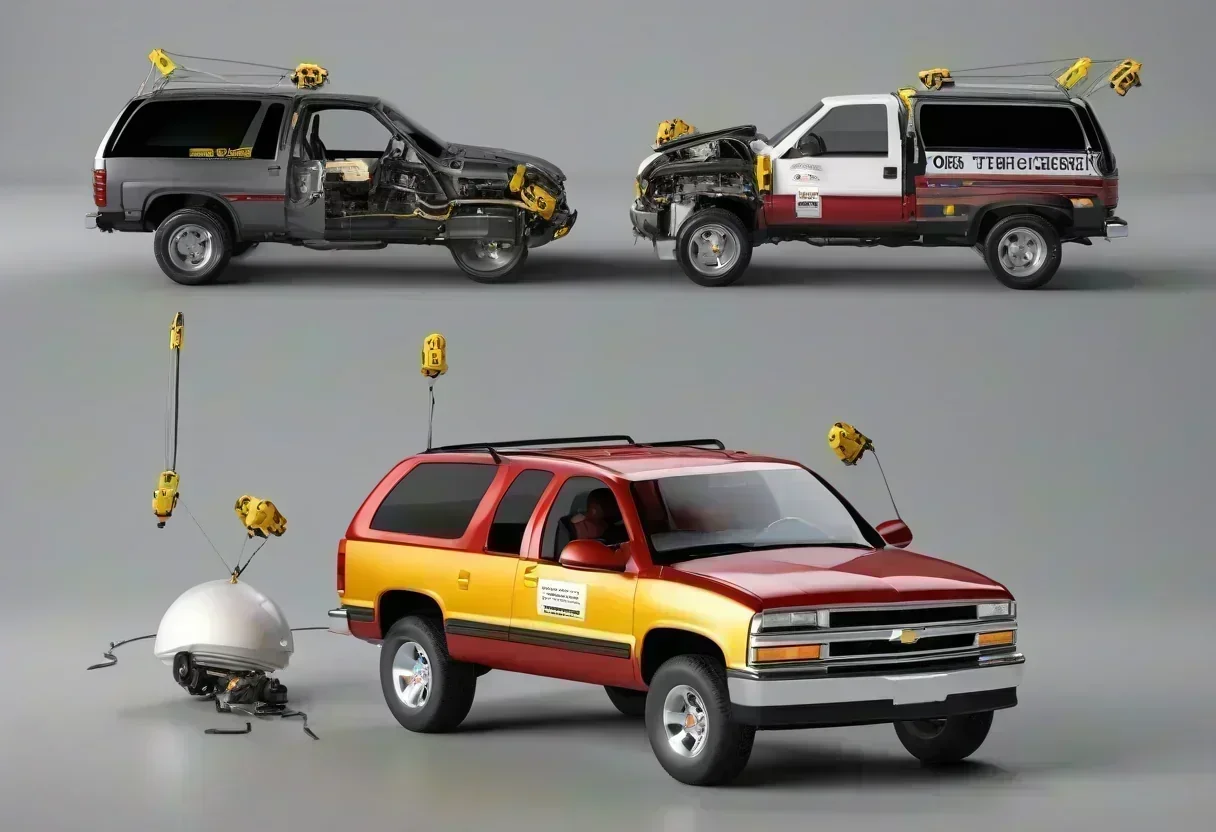
The Insurance Institute for Highway Safety (IIHS) crash-tested a 2026 Chevrolet Blazer against a 1996 Blazer, highlighting significant safety improvements over the past 30 years.
Key Takeaways
- The IIHS crash-tested a 2026 Blazer against a 1996 Blazer to demonstrate safety improvements.
- The new Blazer driver would sustain minimal injuries in a crash.
- The older Blazer driver could have been fatally injured in the same crash.
- The IIHS has saved nearly 50,000 lives in 30 years through its crash test programs.
- The institute continues to push for further safety improvements, including safety ratings for heavy-duty trucks.
What are the key differences in safety features between the 2026 and 1996 Blazers?
In my experience, the most significant differences in safety features between the 2026 and 1996 Blazers are the advancements in crumple zones, high-strength steel construction, reinforced side protection, and additional airbags. These innovations have greatly improved the safety of the newer Blazer.
The 2026 Blazer’s passenger compartment is designed to absorb and distribute the forces of a crash, reducing the risk of injury to occupants. In contrast, the 1996 Blazer’s passenger compartment is more rigid and prone to collapse in the event of a crash.
How do the crash test results compare between the two Blazers?
The crash test results are striking. The 2026 Blazer’s driver would likely walk away from the crash with bumps and bruises, while the 1996 Blazer driver could have sustained fatal injuries. The IIHS crash test footage shows the older Blazer’s passenger compartment compromised, with a bent A-pillar and roof structure.
The dashboard and steering column were pushed into the crash dummy’s lap, and the fully inflated airbag hit the dummy in the chin, snapping its neck back. In contrast, the 2026 Blazer’s airbags deployed correctly, and the passenger compartment remained intact.
What are the implications of these crash test results for consumer safety?
The implications are clear: newer vehicles are significantly safer than their older counterparts. The IIHS crash test results demonstrate the importance of investing in safety features and technologies. Consumers should prioritize safety when purchasing a vehicle, and manufacturers should continue to innovate and improve their safety features.
Some people may assume that older vehicles are safer due to their use of more metal, but this is a misconception. The IIHS crash test results show that newer vehicles, like the 2026 Blazer, are designed to be safer and more protective of occupants.
How has the IIHS contributed to improved vehicle safety over the past 30 years?
The IIHS has played a crucial role in improving vehicle safety over the past 30 years. Through its crash test programs, the institute has pushed manufacturers to adopt safer designs and technologies. The IIHS estimates that its efforts have saved nearly 50,000 lives and $500 billion in societal economic benefits.
The institute continues to push for further safety improvements, including adding safety ratings to heavy-duty trucks. This is a critical area of focus, as 6,535 people were killed in crashes involving HD or medium-duty trucks and light vans in 2023.
What’s next for vehicle safety, and how can consumers stay informed?
As vehicle safety continues to evolve, consumers should stay informed about the latest developments and technologies. The IIHS provides valuable resources and information on vehicle safety, including crash test results and safety ratings.
Consumers can also take steps to prioritize safety when purchasing a vehicle, such as researching safety features and technologies, checking safety ratings, and test-driving vehicles to get a sense of their safety performance.
Frequently Asked Questions
Q: What is the main difference in safety features between the 2026 and 1996 Blazers?
A: The main difference is the advancements in crumple zones, high-strength steel construction, reinforced side protection, and additional airbags in the 2026 Blazer.
Q: How many lives has the IIHS estimated it has saved through its crash test programs?
A: The IIHS estimates that its efforts have saved nearly 50,000 lives over the past 30 years.
Q: What is the IIHS pushing for in terms of further safety improvements?
A: The IIHS is pushing for the addition of safety ratings to heavy-duty trucks, a measure that has been desperately needed for years.