Porsche Cayenne Electric Keeps Pace with Stratolaunch Roc Aircraft in High-Speed Test
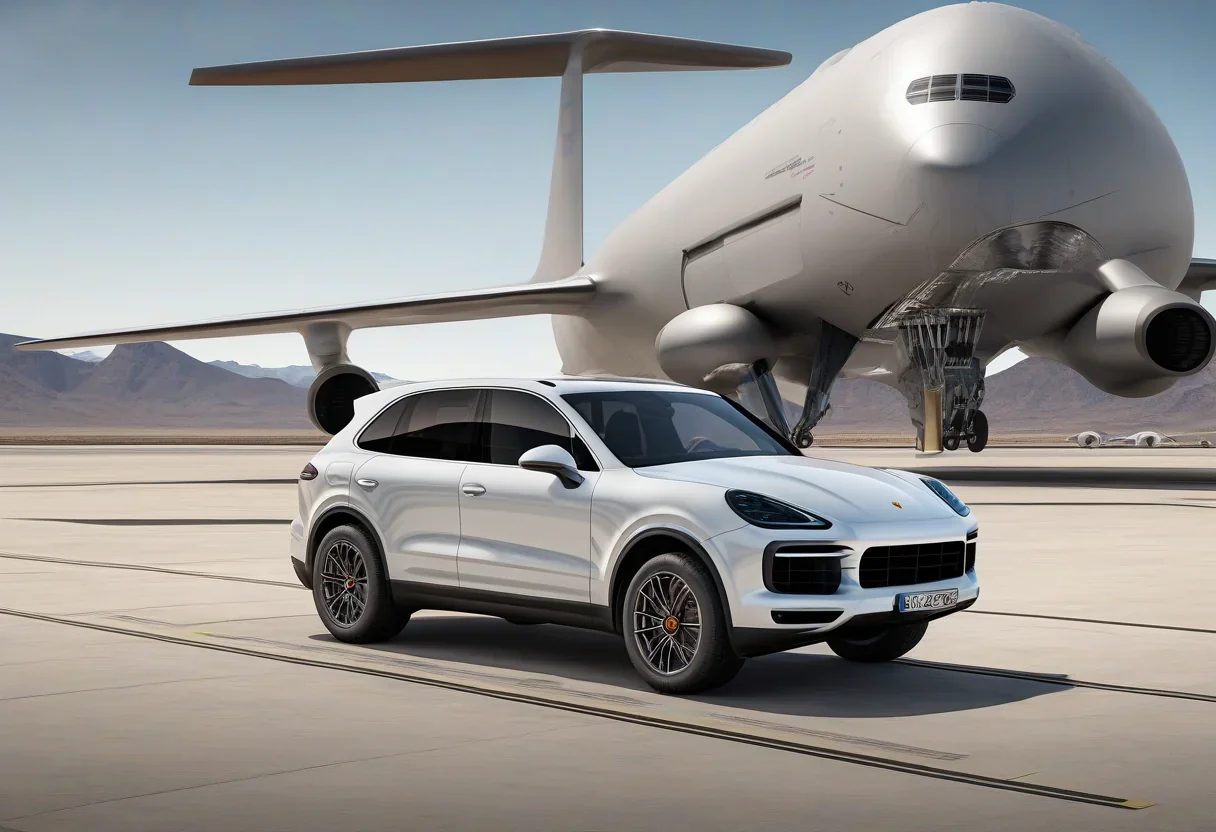
Porsche's Cayenne Electric SUV successfully kept pace with the Stratolaunch Roc aircraft during high-speed test runs at Mojave Air and Space Port.
Key Takeaways
- The Porsche Cayenne Electric SUV was tested at Mojave Air and Space Port to evaluate its high-speed stability alongside the Stratolaunch Roc aircraft.
- Former Porsche factory driver Patrick Long drove the Cayenne Electric, which exceeded speeds of 160 mph during the test runs.
- The SUV’s 1139 horsepower allowed it to keep pace with the Pratt & Whitney-powered aircraft up to its rotation speed.
- The test required precise communication between the Porsche crew and the flight crew to ensure safe and successful runs.
- The Cayenne Electric used only 13 percent of its battery charge during the four flat runs.
What Makes the Porsche Cayenne Electric So Fast?
The Porsche Cayenne Electric’s impressive performance can be attributed to its powerful electric motor, which produces 1139 horsepower. This allows the SUV to accelerate quickly and maintain high speeds, making it an ideal candidate for high-speed testing alongside an aircraft.
The Cayenne Electric’s electric powertrain also provides instant torque, which enables the vehicle to respond rapidly to driver input. This responsiveness is crucial during high-speed testing, where precise control is essential.
How Did the Test Runs Work?
The test runs involved the Porsche Cayenne Electric pacing the Stratolaunch Roc aircraft during takeoff and landing. The SUV’s driver, Patrick Long, had to carefully time his inputs to match the aircraft’s speed and trajectory.
The test required precise communication between the Porsche crew and the flight crew to ensure safe and successful runs. The crew chiefs of the Stratolaunch Roc, Shauntel Williams and John McKinney, rode along in the Cayenne Electric to maintain constant radio communication with the flight crew.
What Were the Challenges of the Test?
One of the biggest challenges of the test was timing the Cayenne Electric’s inputs to match the aircraft’s speed and trajectory. The SUV’s driver, Patrick Long, had to carefully judge the aircraft’s distance and speed to ensure a safe and successful run.
Another challenge was the lack of visual references for timing the merge with the aircraft onto the runway. The Stratolaunch Roc’s large size made it difficult to gauge its distance and speed, requiring the driver to rely on communication with the flight crew to ensure a safe and successful run.
What Does This Test Mean for the Future of Electric Vehicles?
The successful test run of the Porsche Cayenne Electric alongside the Stratolaunch Roc aircraft demonstrates the potential of electric vehicles in high-performance applications. The test shows that electric vehicles can be capable of high-speed performance while also providing a sustainable and environmentally friendly alternative to traditional gasoline-powered vehicles.
The test also highlights the importance of precise communication and coordination between different teams and vehicles in high-speed testing. This level of coordination and communication will be essential in the development of future high-performance electric vehicles.
Specifications
| Specification | Value |
|---|---|
| Power | 1139 horsepower |
| Top Speed | Exceeds 160 mph |
| Battery Charge Used | 13 percent |
Frequently Asked Questions
Q: What was the purpose of the test run?
The purpose of the test run was to evaluate the high-speed stability of the Porsche Cayenne Electric SUV alongside the Stratolaunch Roc aircraft.
Q: Who drove the Porsche Cayenne Electric during the test run?
Former Porsche factory driver Patrick Long drove the Cayenne Electric during the test run.
Q: How much battery charge was used during the test run?
The Cayenne Electric used only 13 percent of its battery charge during the four flat runs.