VW Unveils ID.Era 8X: A Range Extender EV With a Twist
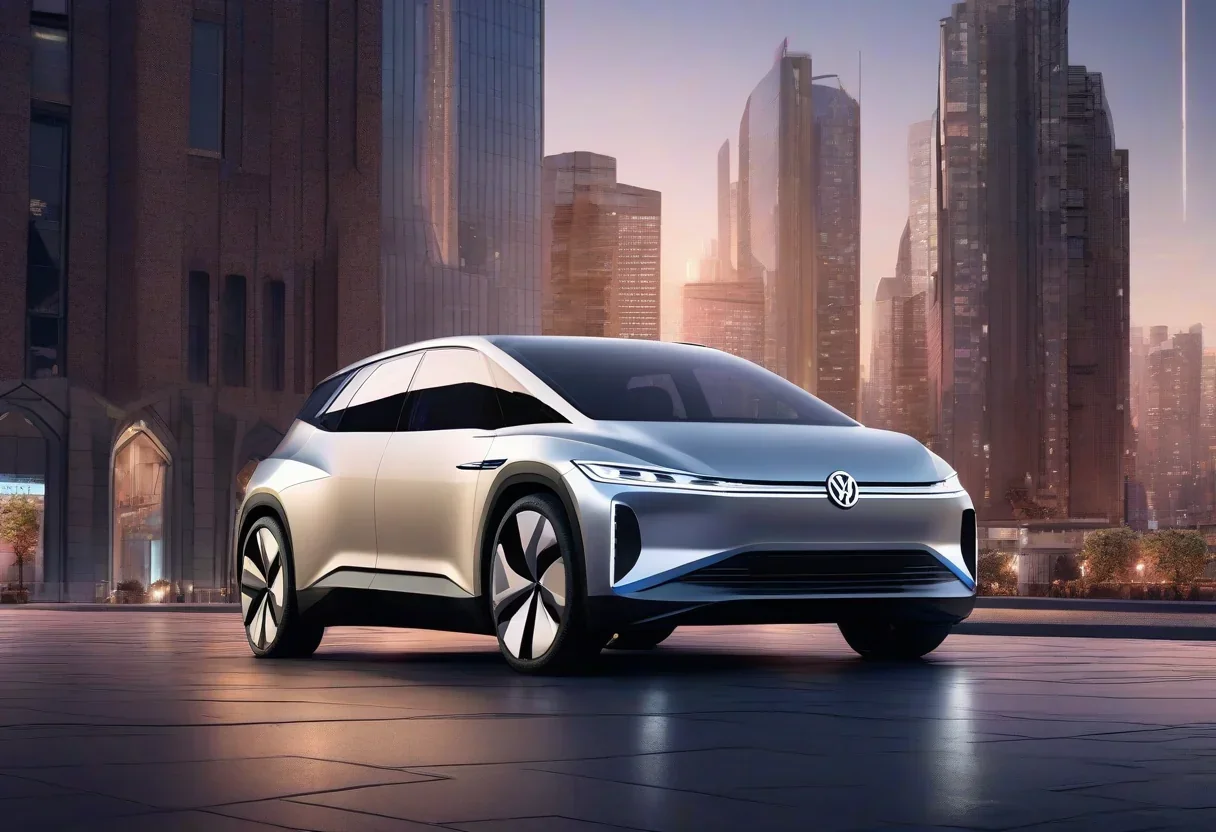
Volkswagen's ID.Era 8X concept blends an extended-range EV platform with a compact combustion range extender — signaling a notable shift in the brand's North American BEV strategy.
Key Takeaways
- Volkswagen AG unveiled the ID.Era 8X concept in mid-2026 — a battery EV with an onboard compact combustion range extender, marking a notable departure from VW’s stated “battery-only” electrification strategy.
- The range extender is described as a compact, optimized single-cylinder E85-capable engine that drives an alternator to top up the battery when range would drop below 80 miles.
- Combined electric-plus-generator range is approximately 620 miles under WLTP conditions — more than double most current BEV crossovers.
- The range-extender module could theoretically be adapted across Audi, Škoda, and SEAT/CUPRA models on the upcoming SSP (Scalable Systems Platform).
- Three converging pressures explain the pivot: U.S. BEV adoption at roughly 8% of light-vehicle sales, EU CO₂ targets that favor range-extender architectures, and “range anxiety” as the #1 U.S. consumer purchase barrier.
What Makes the ID.Era 8X Different From a Regular Plug-in Hybrid
Volkswagen unveiled the ID.Era 8X concept at Volkswagen’s Neckarsulm design studio in June 2026. The distinction that VW’s engineering team emphasized in the technical briefing is that the ID.Era 8X does not route both power systems through a shared transmission. The battery is the primary energy store. The combustion unit acts solely as a generator.
This is conceptually similar to what BMW explored with the i3 REX (range-extended version sold in select markets from 2014 to 2021) and what Chevrolet attempted with the second-generation Volt before discontinuing it in 2019. The difference is scale: VW is positioning this for its mass-market ID. family rather than a niche city car. The SSP architecture VW Group is developing across its core brands means the range-extender module is designed as a standardized drop-in component.
In practice, the compact combustion unit engages when battery state of charge drops to a threshold — estimated around 20% SOC based on the briefing — and runs at a constant, efficient speed to generate electricity. Drivers do not select gears or manage the transition; the vehicle’s energy management system handles it automatically, similar to how a BMW i3 REX operates but at highway speeds where range anxiety is most acute.
Why Volkswagen Is Exploring Range Extenders After Embracing Pure BEVs
VW Group CEO Oliver Blume and the Volkswagen brand’s management team have been among the most vocal advocates of pure battery-electric powertrains in the global auto industry. The ID.Era 8X represents a visible pivot from that position — not a retreat, but an acknowledgment that consumer adoption timelines in North America are running behind regulatory targets.
Three converging pressures explain the pivot:
- U.S. market adoption rate: BEVs represented approximately 8% of U.S. light-vehicle sales in the first half of 2026, well below the 50% target for model year 2030 under California’s Advanced Clean Cars II (ACC II) regulations.
- EU CO₂ credit efficiency: The EU’s 2035 CO₂ fleet average limit of 95 g/km (NEDC-based) is calibrated to favor range-extender architectures, which can exploit test-cycle loopholes more cost-effectively than weight-penalized large-battery BEVs.
- North American consumer research: VW’s internal market research consistently identifies “range anxiety” as the top purchase barrier in surveys of U.S. consumers considering their first EV.
ID.Era 8X vs. Competitors: Extended-Range EV Comparison
| Vehicle | Primary Powertrain | Range Extender | Combined Range | Status |
|---|---|---|---|---|
| VW ID.Era 8X | BEV + range extender | Single-cylinder E85 engine | ~620 miles (WLTP) | Concept (mid-2026) |
| BMW i3 REX | BEV + range extender | 650cc parallel-twin (Kymco) | ~200 miles total | Discontinued 2021 |
| Chevrolet Volt (2nd gen) | PHEV + range extender | 1.5L ECOTEC flex-fuel | ~420 miles total | Discontinued 2019 |
| Audi A6 e-tron (concept) | Pure BEV | None | ~435 miles (WLTP est.) | Production 2026 |
What the SSP Architecture Means for the Rest of VW Group
The SSP (Scalable Systems Platform) is Volkswagen AG’s next-generation vehicle architecture intended to replace both the current MEB and MLB platforms across the core VW, Audi, Škoda, and SEAT/CUPRA brands by the early 2030s. VW Group’s publicly disclosed SSP technical roadmap describes the platform as designed from the ground up to accommodate a range-extender module as a standard optional component.
This modularity is the strategic insight behind the ID.Era 8X concept: VW is not announcing a single car. It is demonstrating a powertrain architecture that could theoretically be fitted to a Škoda compact hatchback, a SEAT/CUPRA performance model, or an Audi luxury sedan — depending on market demand and regulatory requirements in each region.
Frequently Asked Questions
Is the ID.Era 8X going into production?
Volkswagen has not committed to a production date. The ID.Era 8X remains a concept as of mid-2026. A decision on production is expected by late 2026 or early 2027, with a potential 2028 model year launch on the SSP platform if VW Group’s board approves the investment.
How does the range extender affect emissions compliance?
Under EU WLTP testing, the ID.Era 8X with range extender would likely be classified as a PHEV (Plug-in Hybrid Electric Vehicle) rather than a pure BEV, which changes its CO₂ accounting. This is precisely why VW is exploring the architecture — a 620-mile WLTP range with a PHEV classification generates more favorable CO₂ credits than a 400-mile BEV under current EU fleet averaging rules.